

Do I Need a Dental Crown or a Bridge?
Do I Need a Dental Crown or a Bridge? Your Guide to Restoring Damaged or Missing Teeth
Dental crowns and bridges are two of the well-established restorative options available when it comes to strengthening damaged teeth or replacing missing ones. At our practice, we offer solutions to help you regain function and improve the enhance the aesthetics of your smile.
Understanding Dental Crowns
What is a dental crown?
A dental crown is a full coverage restoration that caps a damaged tooth. It protects the entire structure, restoring the tooth’s strength, function, and appearance.
When is a dental crown recommended?
You may need a dental crown if:
- A tooth is severely damaged or decayed
- There is a large filling that weakens the tooth
- You’ve had root canal treatment, making the tooth brittle
- A tooth is cracked or fractured
- A crown may be considered if other treatments are unlikely to achieve a significant improvement in the appearance of a severely damaged tooth. However, individual results may vary and the specific outcome cannot be guaranteed.
Benefits of dental crowns
- Aims to blend aesthetically with your natural teeth
- Durable and designed for longevity (typically 10-15 years with proper care)
- Restores function and helps protect the tooth from further damage
- Custom-matched to complement your natural teeth
Exploring Dental Bridges
What is a dental bridge?
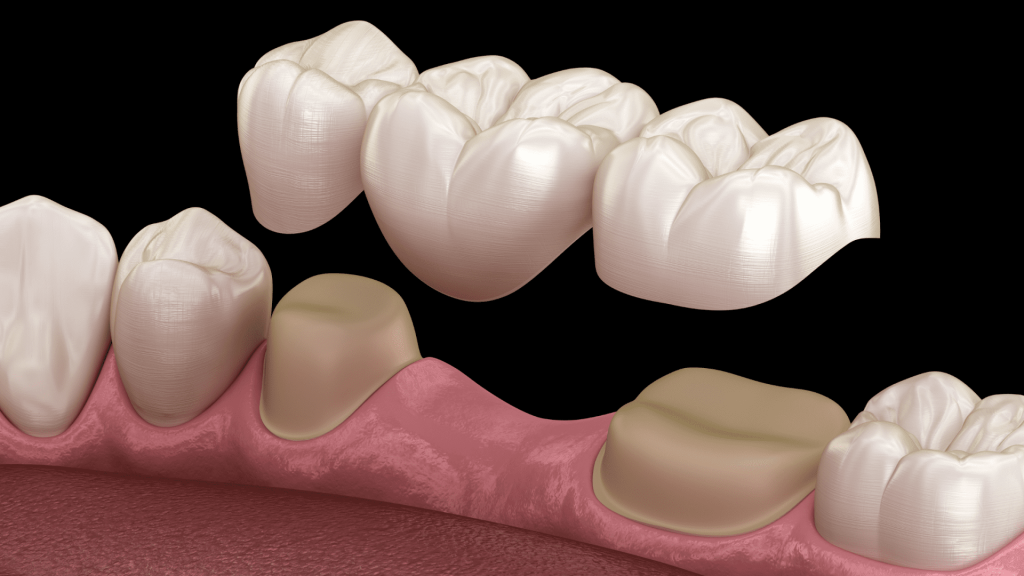
A bridge replaces a missing tooth by anchoring a false tooth (pontic) between two crowns on adjacent teeth. This closes the gap and enhances the appearance of your smile.
When is a bridge recommended?
- You’ve lost a tooth with healthy teeth on either side
- You want a fixed, non-removable solution
- You want to prevent the shifting of neighbouring teeth
Benefits of dental bridges
- Restores your ability to chew and speak
Prevents the movement of adjacent teeth - Aims to provide an aesthetic appearance
- Helps improve the appearance of a complete smile
What to Expect During Your Appointment
Your dentist will assess your oral health and discuss which option suits your situation. If a crown or bridge is appropriate, reduce the tooth to make space for the crown and bridge, and impressions will be taken to custom-create your restoration. A temporary crown and bridge will be used while your final crown or bridge is being fabricated.
Looking After Your Crown or Bridge
- Brush and floss regularly, especially around the restoration
- Use a floss threader or interdental brush for bridges
- Avoid hard or sticky foods that may damage the restoration
- Visit your dentist regularly for check-ups and cleans
Frequently Asked Questions
Q: How long does a dental crown or bridge last?
A: With proper care, crowns and bridges can last 10 to 15 years or more.
Q: Is the procedure painful?
A: We use local anaesthetic to minimise discomfort during the procedure. Patients’ experiences with pain vary, and we encourage you to discuss any concerns with your dentist.
Q: Can I eat normally with a bridge or crown?
A: Yes, once the restoration is placed, you can enjoy your usual diet with some basic precautions.
Considering Restorative Options?
Whether you’re dealing with a damaged tooth or looking to replace one that’s missing, our team can guide you through the well-established restorative options. Our team is committed to providing quality care and has significant experience in restorative dentistry, Mornington Peninsula Dental Clinic offers tailored crown and bridge solutions that restore your ability to chew, speak and enhance your smile.
We’ll walk you through your options clearly and make sure you feel comfortable at every step.
Book online or call Mornington Peninsula Dental Clinic.
Important: As with any dental procedure, crowns and bridges carry potential risks and benefits. We encourage you to discuss all treatment options, risks, and expected outcomes with your dentist during your consultation.